HPV : The Hidden Virus Behind Many Cancers
(Pediatrics Center) article author : Wankwan Ak-kayakul, M.D. 2026-07-22 10:04:00

HIGHLIGHTS:
- HPV is a major cause of cervical cancer and several other HPV-related cancers.
- HPV vaccination can reduce the risk of cervical cancer by 70–90%, depending on the type of vaccine.
- Both girls and boys should receive the HPV vaccine to help prevent HPV infection and related diseases.
- HPV vaccination is recommended from 9 years of age and is most effective when given before the onset of sexual activity.
- The HPV vaccine has an excellent safety profile. Most side effects are mild and usually resolve within 2–3 days.
- Getting vaccinated against HPV is an investment in lifelong cancer prevention and long-term health.
HPV : The Hidden Virus Behind Many Cancers
What is the HPV Vaccine?
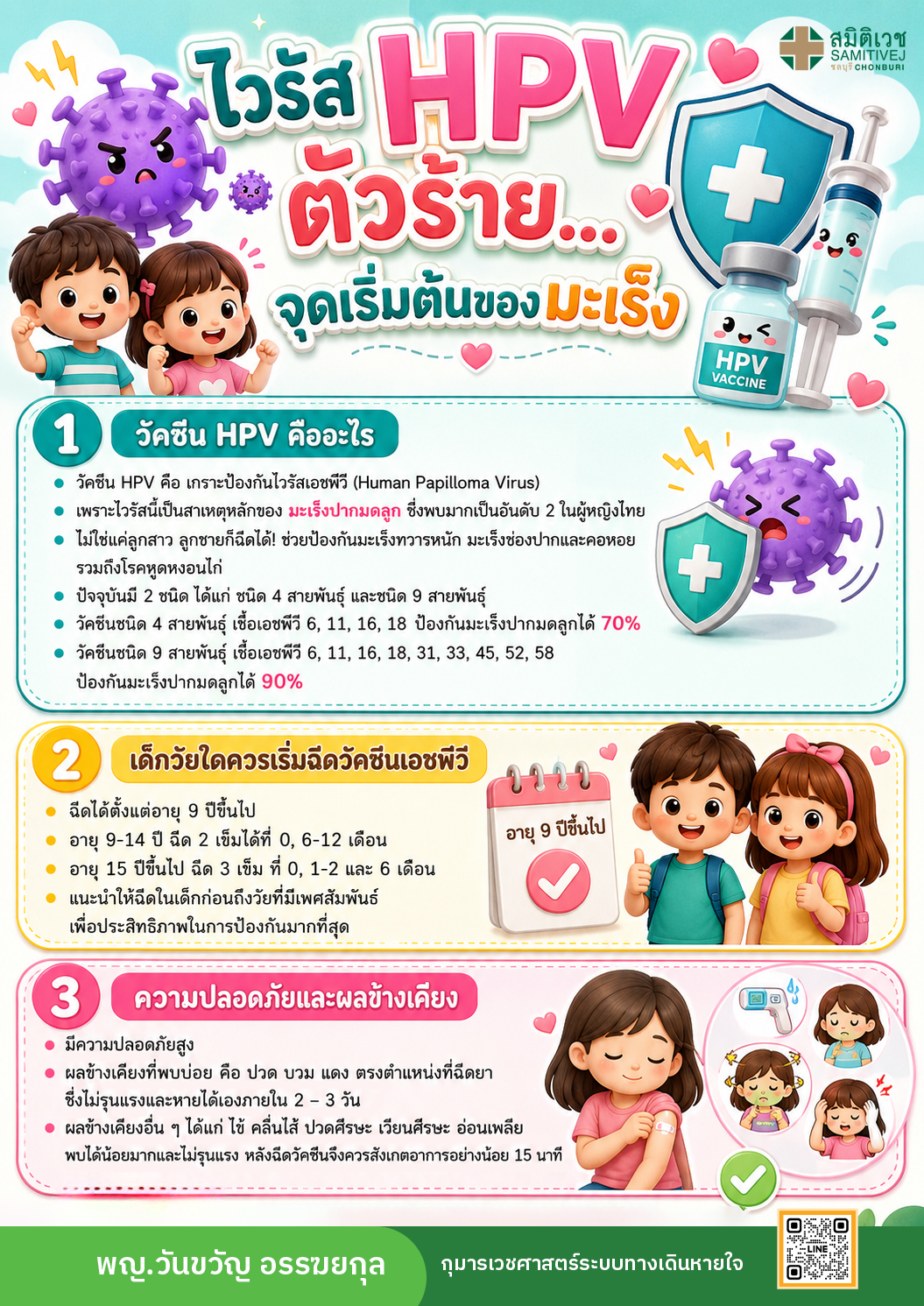
- The HPV vaccine helps protect against Human Papillomavirus (HPV) infection.
- HPV is the leading cause of cervical cancer, the second most common cancer among Thai women.
- HPV vaccination is recommended for both girls and boys. It also helps reduce the risk of anal cancer, oropharyngeal (mouth and throat) cancer, and genital warts.
- Two types of HPV vaccines are commonly available:
- 4-valent HPV vaccine
- 9-valent HPV vaccine
- 4-valent vaccine protects against HPV types 6, 11, 16, and 18, preventing approximately 70% of cervical cancers.
- 9-valent vaccine protects against HPV types 6, 11, 16, 18, 31, 33, 45, 52, and 58, preventing approximately 90% of cervical cancers.
When Should Children Receive the HPV Vaccine?
- Vaccination can begin from 9 years of age.
- Children aged 9–14 years: 2-dose schedule at 0 and 6–12 months.
- Individuals aged 15 years and older: 3-dose schedule at 0, 1–2, and 6 months.
- Vaccination is recommended before the onset of sexual activity for the best protection.
Recommended Age: 9 years and older
Safety and Possible Side Effects
- The HPV vaccine has an excellent safety profile.
- The most common side effects are pain, redness, and swelling at the injection site, which are usually mild and resolve within 2–3 days.
- Less common side effects may include fever, nausea, headache, dizziness, and fatigue. These are generally mild and temporary.
- After vaccination, recipients should remain under observation for at least 15 minutes.
Dr. Wankwan Arayakul, M.D.
Pediatric Pulmonologist
Samitivej Chonburi Hospital





































 Hospital Articles